How to Get Backlinks in 2026: 11 White-Hat Methods That Still Work
Every SEO guide tells how to get backlinks matter. Very few tell you how to actually get them without wasting months on emails nobody answers or, worse, buying links that get your site penalized.
This guide fixes that. Below you’ll find 11 white-hat methods we use for real clients, the order to use them in, and the mistakes that quietly kill most link building campaigns. If you are new to the topic, start with our explainer on how relevant backlinks improve your website’s authority, then come back here for the practical part.
Why backlinks still matter in 2026
Google has changed a lot, but one thing hasn’t: links from other trusted websites are still one of the strongest signals that your page deserves to rank. A backlink is a vote. When a relevant, respected site links to you, it tells search engines (and AI search tools that cite sources) that your content is worth trusting.
What has changed is quality. Ten links from real, topically relevant sites will beat a hundred links from spammy directories. That is why “how to get backlinks” today really means “how to earn backlinks that look natural.”
Before you build a single link: fix the foundation
Outreach is much easier when the page you’re promoting deserves a link. Before you start, check three things:
- The page is genuinely useful. It answers the query better than what is currently ranking.
- The site looks trustworthy. Clear About page, contact details, no broken layout. (Our guide to SEO friendly website design covers this.)
- You know your target pages. Pick 3–5 money or pillar pages to point links at, instead of scattering links everywhere.
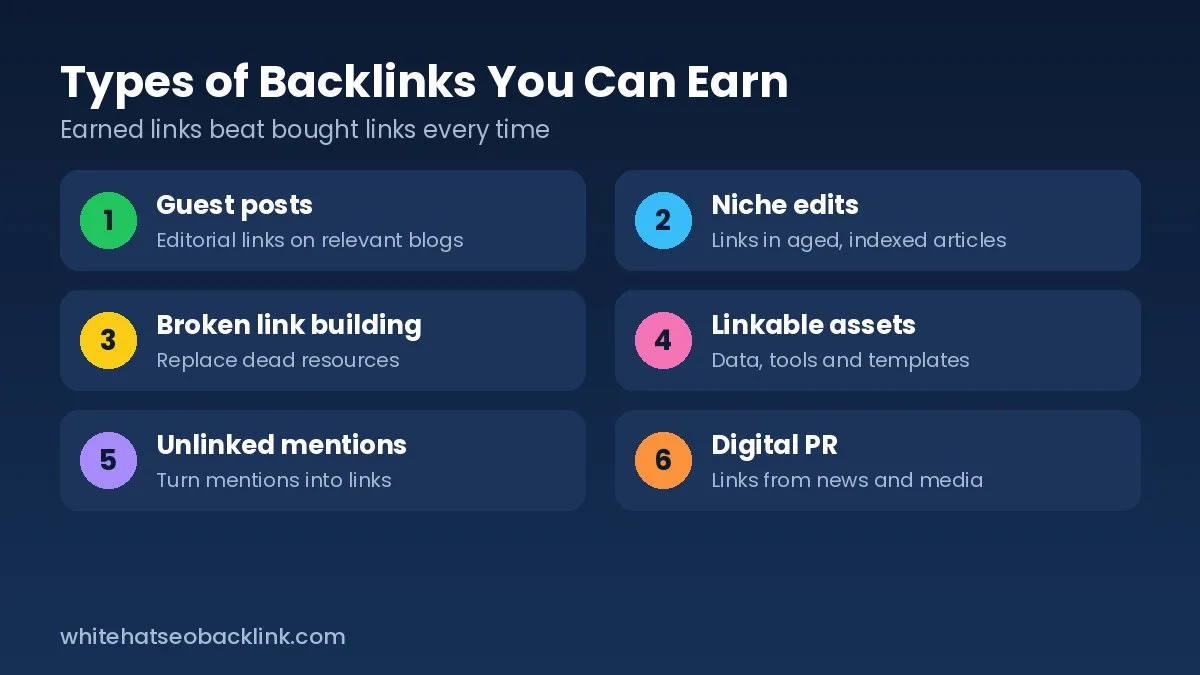
11 white-hat ways to get backlinks
1. Guest posting on relevant sites
Guest posting still works when the site is real, has organic traffic, and covers your topic. Pitch an idea that fills a gap on their blog, not a generic “can I write for you?” email. Always vet the site first using our 9-point guest post site quality checklist.
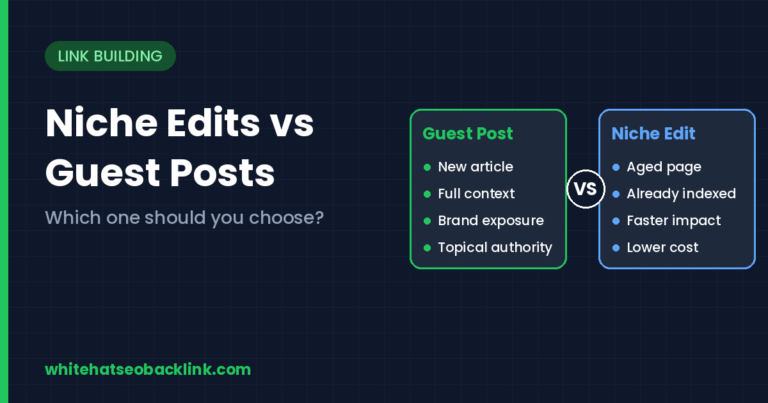
2. Niche edits (link insertions)
A niche edit adds your link to an existing, already-indexed article. Because the page already has age and authority, these links can work fast. They’re not a replacement for guest posts, though. Here is our full breakdown of niche edits vs guest posts.
3. Broken link building
Find pages in your niche that link to dead resources, then offer your content as a replacement. You’re helping the site owner fix a problem, so reply rates are higher than cold pitches.
How to do it: put a competitor or popular resource into a backlink tool, filter for broken (404) pages, and check who still links to them.
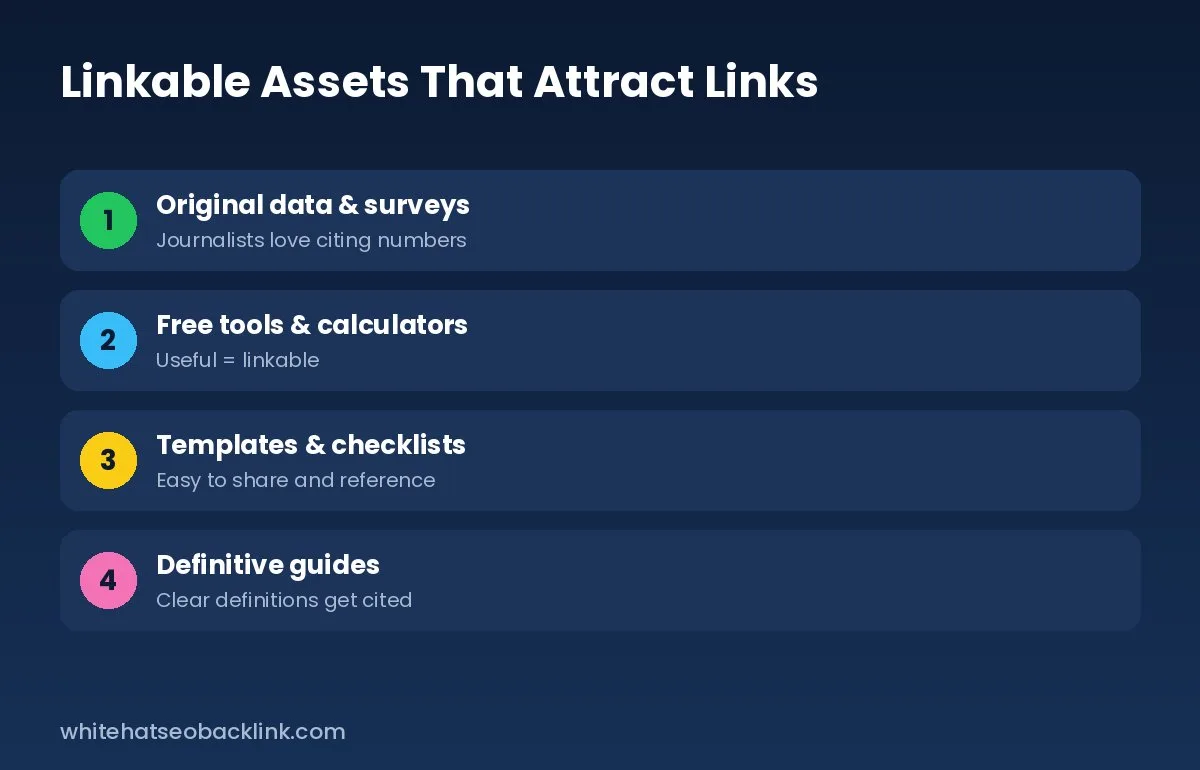
4. Create a linkable asset
Some content earns links on its own: original data, free tools, templates, calculators, and “ultimate” guides with clear definitions. Writers and journalists need something to cite. Give it to them.
5. Unlinked brand mentions
People may already be talking about your brand without linking. Set up a mention alert, then send a short, friendly note asking them to turn the mention into a link. This is the easiest win in link building.
6. Digital PR and journalist requests
Platforms that connect journalists with experts let you answer questions in your field. A good, quotable answer can land links from news sites that are almost impossible to get any other way.
7. Resource page link building
Many sites keep “useful resources” pages. Search Google for your topic + "useful resources" or inurl:resources, then pitch your best guide as an addition.
8. Skyscraper (but do it properly)
Find content that already has lots of backlinks, make something clearly better (more current, more complete, better visuals), then reach out to the people linking to the old version. The key word is clearly better. A slightly longer copy won’t convince anyone.
9. Competitor backlink gap
Pull the referring domains of your top 3 competitors and look for sites linking to two or more of them but not to you. Those sites are already open to linking in your niche.
10. Partnerships, suppliers and testimonials
Tools you use, agencies you work with, and partners you supply often have “customers” or “partners” pages. A short testimonial can earn a relevant link in minutes.
11. Podcast and webinar guesting
Podcast show notes almost always link to guests. One interview can also bring brand mentions, social shares and new clients.
A simple outreach workflow that gets replies
Most outreach fails because it’s generic. Use this workflow for every campaign:
- Prospect: build a list of relevant sites with real traffic.
- Qualify: remove sites that sell links openly, have thin content or no traffic.
- Personalise: mention a specific article and why your resource helps their readers.
- Pitch: keep it under 120 words, one clear ask.
- Follow up once: after 4–5 days. Then move on.

Example outreach email
Subject: Quick fix for your [article name] post
Hi [Name], I was reading your guide on [topic] and noticed the link to [resource] now returns a 404. We recently published [your resource], which covers the same points with updated 2026 data. Might be a useful swap for your readers. Either way, thanks for the great article!
How to judge if a backlink is worth getting
Not all links help. Before you chase an opportunity, run it through this quick filter:
- Relevance: does the site cover your topic or a closely related one?
- Real traffic: does it rank for keywords and get organic visits?
- Editorial standards: would a real reader find your link useful there?
- Outbound link pattern: does it link out to casinos, pills or random niches? Skip it.
- Placement: a link inside the body content beats a footer or author bio link.

Mistakes that waste your link building budget
- Chasing DA alone. A high Domain Authority site in an unrelated niche passes very little topical value.
- Over-optimised anchor text. Use branded and natural anchors most of the time; exact-match anchors should be rare.
- Building links to weak pages. Links can’t rescue content that doesn’t satisfy the search.
- Stopping too early. Links compound. Consistent monthly link building beats one big burst.
Link building is one part of a bigger off-page strategy. If you want the full picture, work through our off page SEO checklist.
FAQs about getting backlinks
How many backlinks do I need to rank?
There is no fixed number. Look at how many referring domains the top 5 pages for your keyword have, then aim to match the quality, not just the count.
How long do backlinks take to work?
Most links start showing an effect in 4–12 weeks, depending on how often Google crawls the linking page and how competitive your keyword is.
Is buying backlinks safe?
Buying links on low-quality link farms or PBNs is risky and against Google’s guidelines. Paying for editorial work, like a well-researched guest post on a real site, is a different thing, but quality and relevance must come first.
Can I get backlinks for free?
Yes. Unlinked mentions, broken link building, resource pages, HARO-style journalist requests and partnerships cost time, not money.
Want backlinks without the busywork?
Earning links takes time, research and a lot of outreach. If you’d rather focus on your business, our team builds relevant, white-hat backlinks on real websites with real traffic. Explore our link building packages or start with a free link analysis of your site.