Off Page SEO Checklist: 15 Steps to Build Authority Beyond Your Website
You can have perfect content and a fast website and still sit on page two. Why? Because Google doesn’t only look at what you say about your site. It looks at what the rest of the web says about it. That’s off-page SEO.
This off page SEO checklist gives you 15 clear steps to build trust and authority outside your website. Print it, save it, and work through it every month.
What is off page SEO?
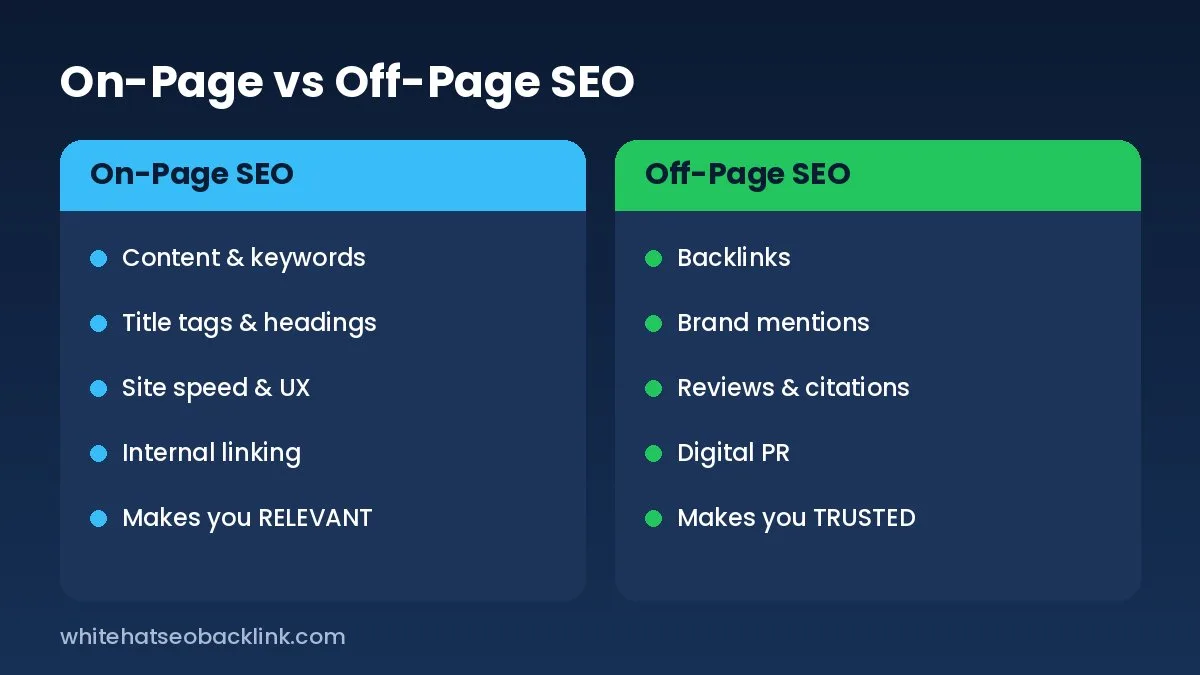
Off page SEO is everything you do outside your own website to improve rankings. The biggest part is earning backlinks, but it also includes brand mentions, reviews, local citations, social signals and digital PR.
In simple terms, on-page SEO makes your page relevant to a search. Off-page SEO makes your site trusted enough to rank for it.
The off page SEO checklist (15 steps)
Part 1: Backlinks and authority
1. Audit your current backlink profile. Find out who links to you now, which pages earn links, and whether any toxic or spammy domains are pointing at you. Not sure where to start? Request a free link analysis.
2. Analyse competitor backlinks. List the referring domains of your top 3 competitors. Sites that link to several competitors but not to you are your warmest prospects.
3. Build relevant, editorial backlinks. Focus on links from sites in your niche with real traffic. Relevance beats raw authority, as we explain in how relevant backlinks improve your website’s authority. For practical methods, see our guide on how to get backlinks.
4. Publish guest posts on quality sites. Pick sites carefully. Use our guest post site quality checklist before you pitch.
5. Add niche edits where they make sense. Link insertions on existing, aged articles can speed up results. Compare the two approaches in niche edits vs guest posts.
6. Keep anchor text natural. Most anchors should be your brand, your URL, or natural phrases. Keep exact-match keyword anchors to a small share.
7. Reclaim lost and broken links. Find links that point to deleted pages on your site and redirect those URLs, or ask the site owner to update the link.

Part 2: Brand and trust signals
8. Turn unlinked brand mentions into links. Search for your brand name and reach out to sites that mention you without a link.
9. Run digital PR. Share original data, expert comments and newsworthy stories with journalists. PR links are among the strongest you can earn.
10. Build a consistent social presence. Social links are not a direct ranking factor, but active profiles help people discover and share your content, which leads to more natural links.
11. Collect reviews. Reviews on Google, Trustpilot and industry platforms build trust with both users and search engines.
Part 3: Local off-page SEO
12. Optimise your Google Business Profile. Complete every field, add photos, choose the right categories and post updates regularly.
13. Build consistent local citations. Your business name, address and phone (NAP) should match across directories and listings.
Part 4: Content distribution
14. Promote every important piece of content. Share it with your email list, communities, and people you mentioned in the article. Great content that nobody sees earns no links.
15. Contribute to podcasts, forums and Q&A sites. Answering questions and appearing as a guest builds brand awareness and often earns links and mentions.
A simple monthly off-page routine
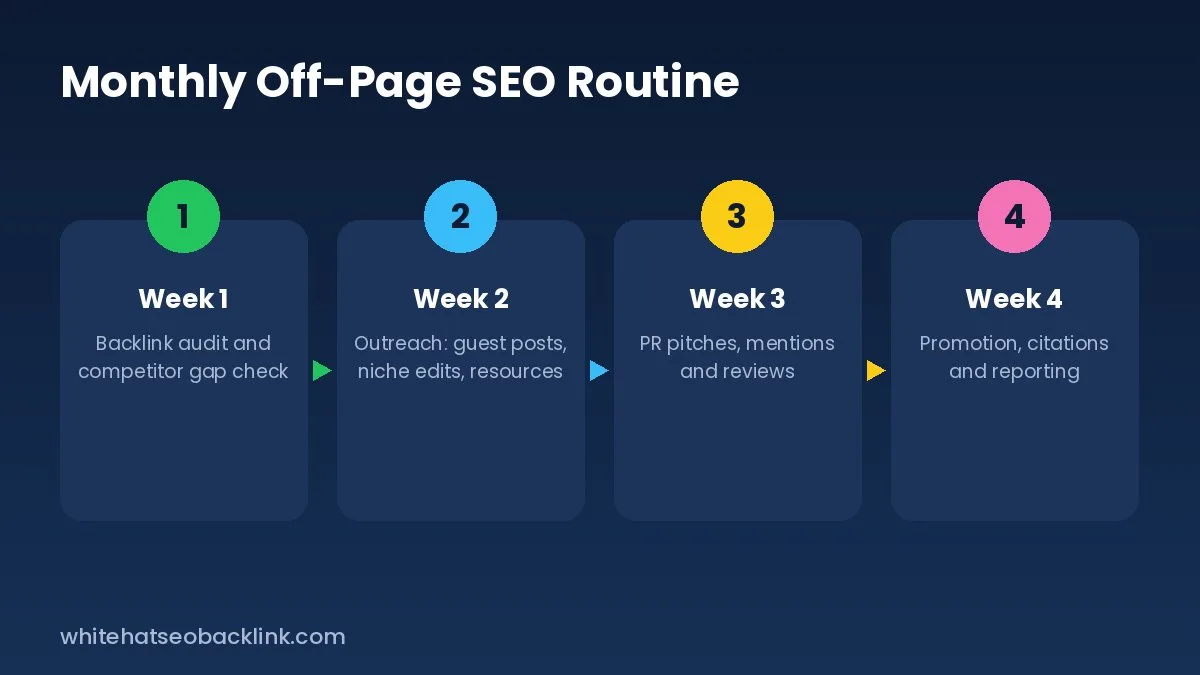
Off-page SEO works best as a habit, not a one-time project. Here’s a simple routine:
- Week 1: backlink audit and competitor gap check.
- Week 2: outreach for guest posts, niche edits and resource pages.
- Week 3: PR pitches, brand mention reclamation and reviews.
- Week 4: content promotion, citations and reporting.
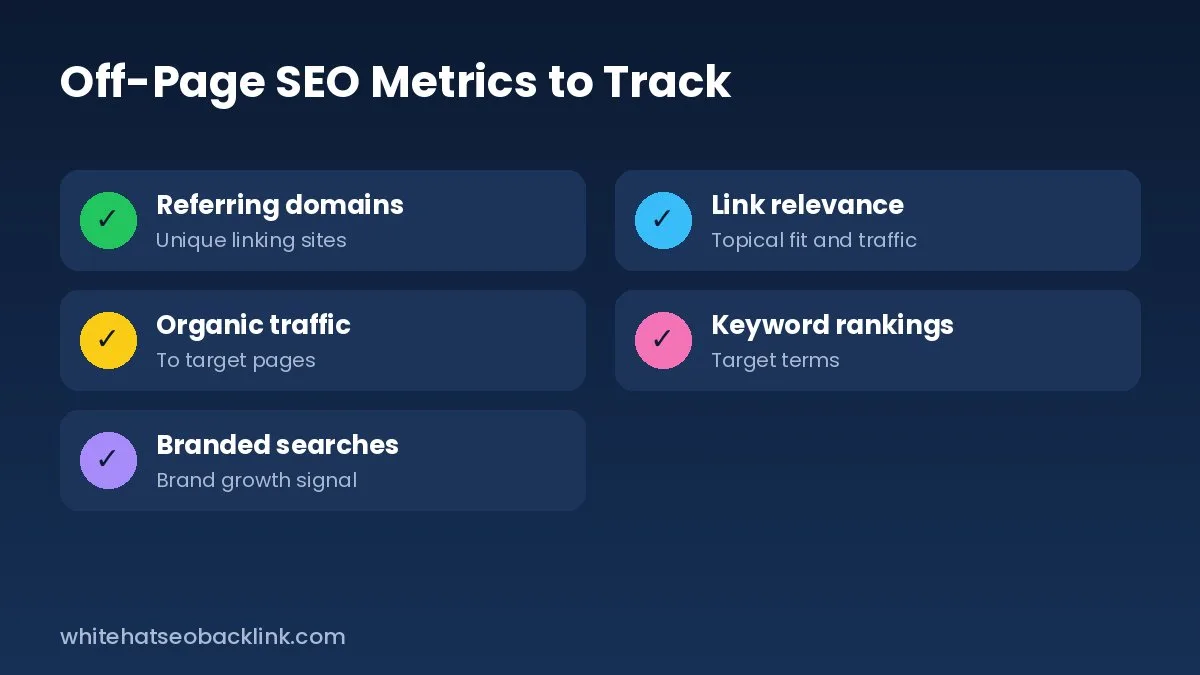
Off-page SEO metrics to track
Measure what matters so you know the checklist is working:
- Referring domains (unique websites linking to you), not just total backlinks.
- Link relevance and traffic of linking sites.
- Organic traffic to the pages you’re building links to.
- Keyword rankings for target terms.
- Branded search volume, a sign your brand is growing.
Common off-page SEO mistakes
- Buying cheap links from PBNs or link farms.
- Building links to pages that don’t deserve to rank.
- Ignoring your website’s foundation. Off-page SEO works better on a site built with SEO friendly website design.
- Giving up after one month. Authority compounds over time. For more information about SEO visit.
FAQs
What is the most important off-page SEO factor?
High-quality, relevant backlinks are still the strongest off-page factor.
How long does off-page SEO take to work?
Usually 2–4 months for noticeable results, depending on competition and how consistent you are.
Is off-page SEO only link building?
No. It also includes brand mentions, reviews, local citations, PR and content promotion, but backlinks are the core.
Can I do off-page SEO myself?
Yes, with time and patience. Many businesses handle the basics themselves and outsource link building to save time.
Let us handle the hardest part
Of all the steps on this checklist, link building takes the most time. Our team builds white-hat backlinks on real, relevant websites so you can focus on running your business. See our packages or get in touch.