Ecommerce Link Building: 10 Practical Ways to Earn Links to Product and Category Pages
Most link building advice is written for blogs. You publish a great guide, you promote it, people link to it. Simple enough. But an online store is a different animal. Nobody wakes up wanting to link to a product page that says “Blue Ceramic Mug, $18, Add to Cart.”
That is the real challenge of ecommerce link building. The pages that make you money are the pages people are least likely to link to. Yet those same category and product pages need authority to rank for buying keywords like “handmade ceramic mugs” or “running shoes for flat feet.”
The good news is that stores have link opportunities blogs never get: suppliers, brand partners, product reviewers, gift guides, and real customers. This guide walks through ten methods that work for online shops of any size, plus how to move that authority to the pages that actually sell.
Why Ecommerce Link Building Is Different
A content site can attract links with one strong article. A store usually has hundreds or thousands of pages, and most of them look similar. Three things make it harder:
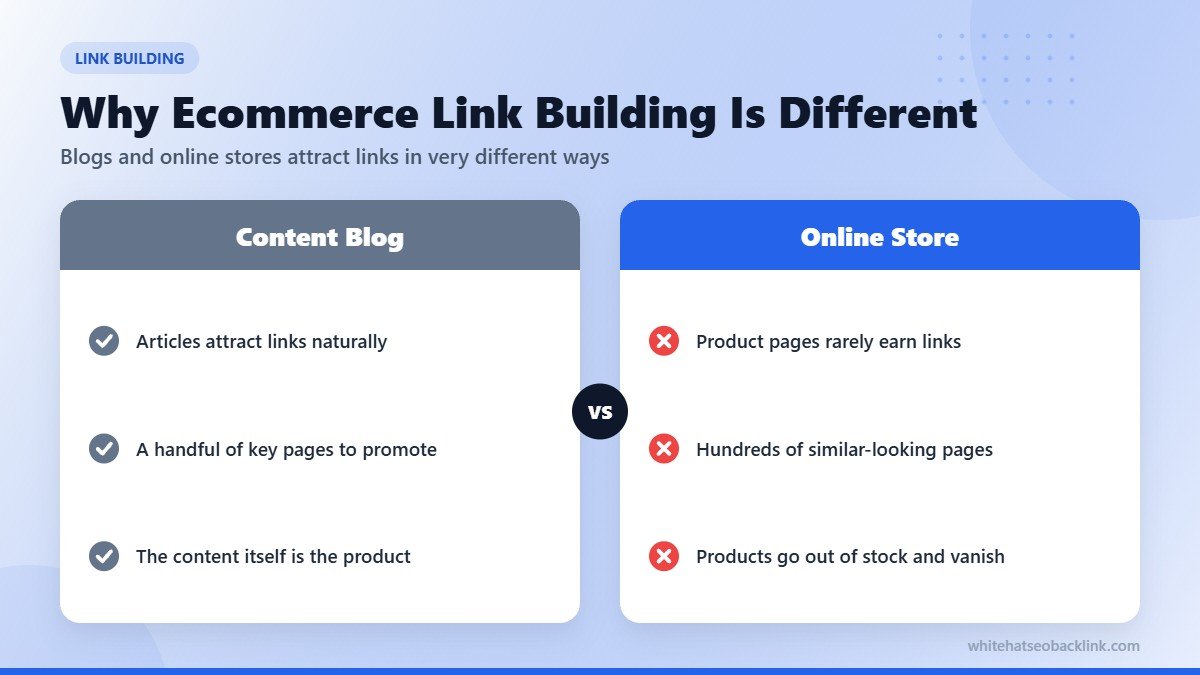
- Commercial pages rarely earn natural links. Writers link to sources that help their readers, not to checkout pages.
- Competitors often have big brand budgets. You are up against Amazon, marketplaces and well-known retailers on many terms.
- Product pages change. Items go out of stock, URLs get removed, and links pointing to them can end up on a 404.
So the strategy has to be a bit smarter. You build links to the pages that naturally attract them (brand pages, guides, tools, your homepage) and then pass that strength to category and product pages through good internal linking. If you are new to the basics, our guide on how to get backlinks covers the core ideas first.
1. Start With Your Suppliers and Manufacturers
This is the easiest win in ecommerce and most stores ignore it. Many brands and manufacturers have a “Where to Buy,” “Stockists” or “Retailers” page. If you sell their products, you have a fair reason to be listed.

Make a list of every brand you stock. Visit their sites and look for a retailer page. If there is one and you are not on it, send a short, friendly email to your account rep. Something like: “We have been selling your range for two years and it is one of our best performers. Could you add us to your stockists page?” These links are relevant, permanent and often come from strong domains.
2. Get Your Products Into Gift Guides and Roundups
Bloggers and journalists publish “best of” lists all year: best gifts for dads, best eco-friendly kitchen products, best budget headphones. These pages link straight to products, which is exactly what you want.
Search Google for phrases like “best [product type] 2026,” “gift ideas for [audience],” and “[product] roundup.” Note the writers who publish these lists regularly. Reach out a few months before the season, because holiday gift guides are often planned in late summer. Offer a sample if the product is affordable. Keep the pitch short: what the product is, who it is for, and why it would suit their readers.
3. Send Products for Honest Reviews
Product reviews are one of the most natural ways for a store to earn links. A niche blogger tries your product, writes about it, and links to it so readers can buy.
A few rules keep this clean and white hat:
- Ask for an honest review, not a positive one.
- Do not pay for the link or demand specific anchor text.
- Remind reviewers that Google expects sponsored or gifted content to be disclosed, and that links from gifted reviews should use rel=”sponsored” or rel=”nofollow.”
You might wonder why bother if the link is nofollow. Because reviews send real buyers, build trust, and often lead to other writers finding and citing you later with normal links. Not every link needs to pass PageRank to be worth having.
4. Create Buying Guides That Deserve Links
Since product pages struggle to earn links, give people something worth citing. A well-made buying guide answers the questions shoppers have before they buy. Think “How to Choose a Hiking Backpack: Size, Fit and Features” or “Cotton vs Linen Bedding: Which Is Better for Hot Sleepers?”
The key is to make it more useful than what already ranks. Add your own photos, simple comparison tables, real measurements, and tips from your team who handle the products every day. Then link from the guide to the relevant category pages. When other sites link to the guide, part of that value flows to the pages that sell.
5. Turn Your Data Into a Story
Every store sits on interesting data. What do people in different cities buy most? Which colours are rising in popularity? What time of night do people shop for coffee makers? Shared carefully and without any personal information, this kind of data makes for content journalists love.
Put together a short report with a few clear charts, write a simple summary of the findings, and pitch it to writers who cover your industry. Even a small store can do this with a year of order data. Original numbers are hard to copy, which is why they attract links.
6. Reclaim Unlinked Brand Mentions
Once your store grows a little, people will mention your brand without linking to it. A local news site covers your launch, a blogger names your shop in a list, a forum post recommends you.
Set up a free Google Alert for your brand name and check it weekly. You can also use a tool like Ahrefs Content Explorer to find mentions. When you spot one without a link, send a quick thank-you and ask if they would mind linking the brand name to your site. Because they already like you, the success rate is much higher than cold outreach.
7. Fix Broken Links to Old Product Pages
Stores remove products all the time. If an old product page had backlinks and now returns a 404, those links are wasted. This is one of the quickest ecommerce link building wins because you are not building anything new, just recovering what you already earned.
Open your backlink tool, filter for links pointing to pages that return a 404, and redirect each one with a 301 to the closest match. A discontinued mug should redirect to the mug category or a similar mug, not to the homepage. Our guide on finding competitors’ backlinks uses the same tools if you want to run this check on rival stores too.
8. Use Local and Community Links
If you have a physical location, a warehouse, or just a home town you are proud of, local links are easy to get and very trustworthy. Ideas that work well:
- Sponsor a local sports team, charity run or school event.
- Join your chamber of commerce or local business association.
- Offer a discount to a local university or club and ask to be listed on their perks page.
- Host a small workshop related to your products.
These links will not all be from huge domains, but they are real, relevant and almost impossible for competitors to copy.
9. Partner With Brands That Share Your Customers
Think about companies that sell to the same people but do not compete with you. A store selling yoga mats and a brand selling plant-based protein have the same customer. You could run a joint giveaway, co-write a guide, or build a “starter kit” bundle together. Each side links to the other because the partnership is real.
This kind of link has a clear reason to exist, which is the best test of whether a link is natural. If you cannot explain why the link is there without mentioning SEO, think twice.
10. Write Guest Posts for Niche Sites (Carefully)
Guest posting still works for stores when it is done for readers first. A coffee equipment shop writing “How to Dial In Espresso at Home” for a home barista blog is helpful content with a natural place to mention its grinders.
Keep it relevant, keep the links modest, and check the site’s quality before you pitch. Our guest post site quality checklist explains what to look for so you avoid link farms.
How to Pass Link Value to Product and Category Pages
Getting links is only half the job. In ecommerce, the money pages are deep in the site, so internal links matter a lot. Here is a simple approach:

- Link from your guides to categories. A buying guide about hiking backpacks should link to the backpack category with natural anchor text.
- Feature top categories in your main menu and homepage. Your homepage usually has the most backlinks, so the pages it links to get a strong boost.
- Use breadcrumbs. They create clean links from products back up to categories.
- Add related product and “customers also bought” sections. These spread authority between products while helping shoppers.
- Keep anchor text varied. Use a mix of brand names, product names and descriptive phrases. See our guide to anchor text diversity for simple rules.
Ecommerce Link Building Mistakes to Avoid
A few common mistakes can undo months of good work:
- Buying cheap link packages. Fifty links for $20 usually means spammy sites that can hurt your rankings.
- Pointing every link at the homepage. It is natural for many links to go there, but guides and categories need some too.
- Deleting product pages without redirects. You lose every link that page earned.
- Ignoring relevance. One link from a respected niche blog is usually worth more than ten from random general sites. Here is why relevant backlinks matter.
- Expecting instant results. Links usually take weeks or months to show their full effect on rankings.
How Many Links Does an Online Store Need?
There is no fixed number. It depends on how competitive your niche is and how strong the stores already ranking are. A small niche shop might rank well with a few dozen quality links, while a store in fashion or electronics may need far more. Look at the pages ranking for your main category keywords and see how many referring domains they have. Our post on how many backlinks you need to rank shows a simple way to work out your own target.
A Simple 90-Day Plan
If you are not sure where to start, try this:
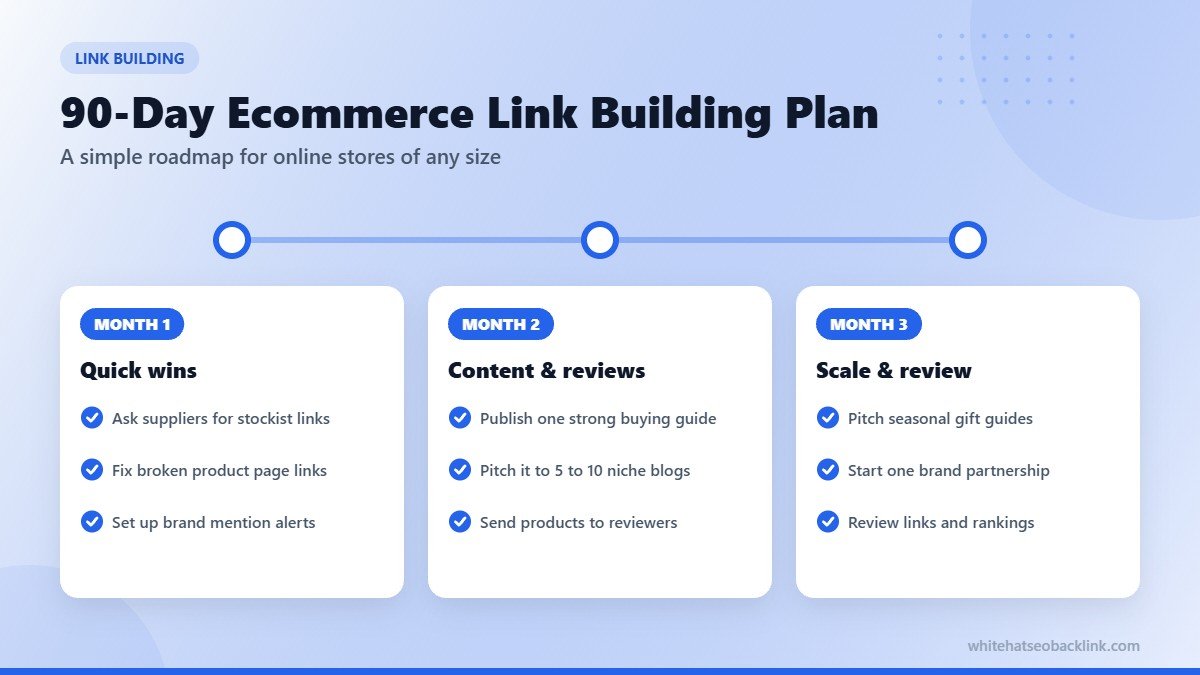
- Month 1: Ask every supplier for a stockist link, fix broken links to old product pages, and set up brand mention alerts.
- Month 2: Publish one strong buying guide and pitch it to five to ten relevant blogs. Send products to a handful of reviewers.
- Month 3: Pitch gift guides for the next season, start one brand partnership, and review which pages gained links and rankings.
Final Thoughts
Ecommerce link building is less about clever tricks and more about using the relationships a store already has: suppliers, customers, reviewers and local communities. Earn links to the pages people want to cite, then use internal links to carry that authority to the products and categories that pay the bills. Do this steadily for a few months and your store will build a backlink profile that is strong, natural and safe for the long run.
Want help building links to your store without the risk? Take a look at what link building costs so you know what fair pricing looks like before you hire anyone.