What Is SEO in Digital Marketing? A Simple Guide for Business Owners
Digital marketing covers a lot: social media, paid ads, email, content, influencers and more. Somewhere in that mix sits SEO, and it’s often the part business owners understand least, even though it can bring in customers for years without paying for every click.
So what is SEO in digital marketing, and where does it fit? This guide explains it in simple terms, shows how it works alongside your other channels, and gives you a clear starting plan.
What Is SEO in Digital Marketing?
SEO, or search engine optimization, is the process of improving your website so it appears higher in unpaid (organic) search results on Google and other search engines. In digital marketing, it’s the channel that helps people find you at the exact moment they’re searching for what you sell.
Think of it this way. Social media and ads put your message in front of people who might be interested. SEO puts you in front of people who are already looking. Someone typing “accountant for small business near me” has a problem and wants a solution right now.

How SEO Works (In Simple Terms)
Search engines like Google do three things:
- Crawl. Automated bots discover pages across the web by following links.
- Index. Google stores and organizes those pages so it can find them later.
- Rank. When someone searches, Google picks the most helpful, trustworthy pages and puts them in order.
SEO is about making your site easy to crawl, clear to understand and trustworthy enough to rank. Google weighs many signals, but the big ones are relevance (does your page answer the search?), quality (is it useful and accurate?), authority (do other sites trust and link to you?) and page experience (is it fast and easy to use?).
The 4 Main Types of SEO
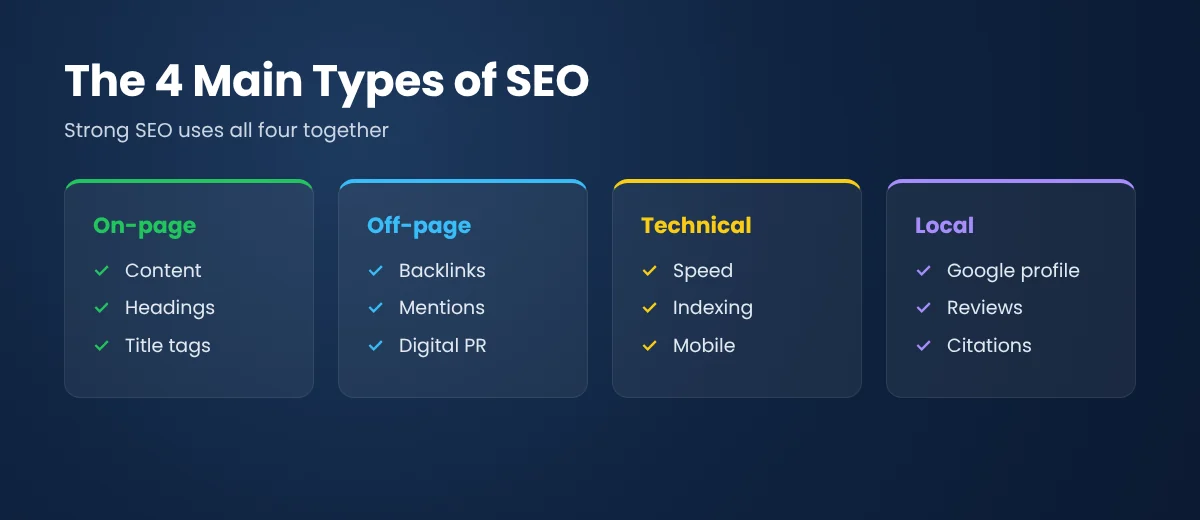
On-page SEO
Everything on your own pages: content, headings, title tags, meta descriptions, images and internal links. On-page SEO makes it clear what each page is about and why it’s the best answer.
Off-page SEO
Signals from outside your website, mainly backlinks from other sites. When reputable websites link to you, Google sees it as a vote of confidence. Our off-page SEO checklist breaks down the main tactics.
Technical SEO
The behind-the-scenes setup: site speed, mobile friendliness, secure HTTPS, crawlability, indexing and structured data. If Google can’t access or understand your pages, nothing else matters much. Start with our technical SEO checklist.
Local SEO
Optimizing for searches in a specific area, like “dentist in Manchester.” It includes your Google Business Profile, local reviews, citations and location pages. For service businesses, it’s often the fastest path to new customers.
SEO vs Other Digital Marketing Channels
Every channel has a role. Here’s how SEO compares to the others.
| Channel | How you pay | Speed of results | How long results last |
|---|---|---|---|
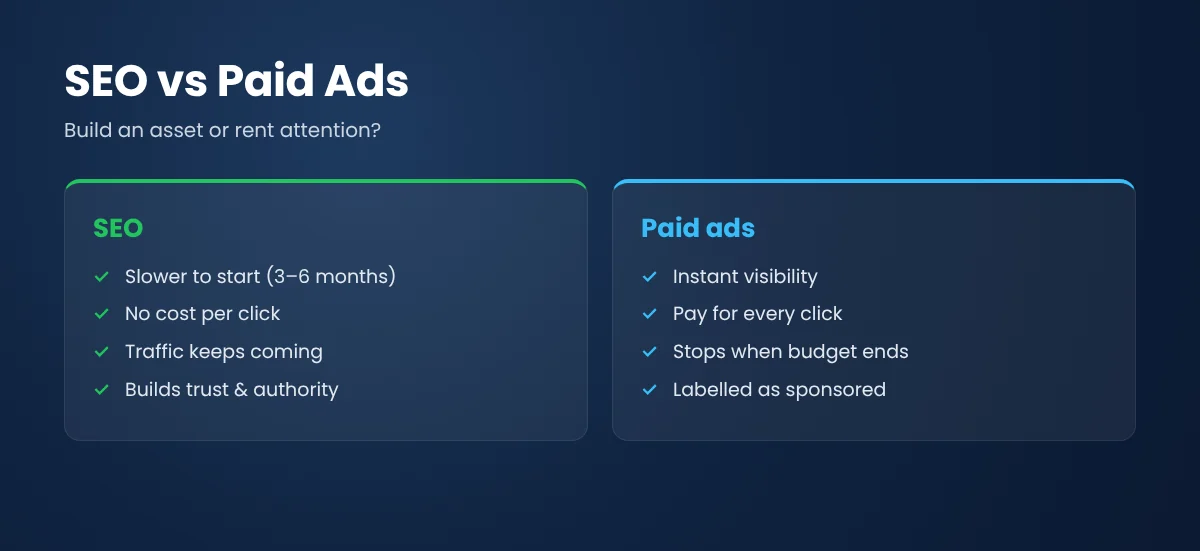
| SEO | Time and expertise | Slow (3–6+ months) | Long-term |
| PPC ads | Every click | Instant | Stops when you stop paying |
| Social media | Time or ad spend | Medium | Short (posts fade fast) |
| Email marketing | Tools and time | Fast | Depends on your list |
| Content marketing | Time and writing | Medium to slow | Long-term |
The biggest difference: with paid ads, traffic stops the moment your budget runs out. With SEO, a page that ranks well can keep bringing visitors for months or years.
Why SEO Matters for Your Business
- It reaches people with intent. Searchers are actively looking for answers, products or services.
- It builds trust. Many people trust organic results more than ads and skip past sponsored listings.
- It compounds over time. Each ranking page keeps working while you build the next one.
- It lowers your cost per customer. Once pages rank, you don’t pay for each visit.
- It supports every other channel. Good SEO content can be shared on social media, sent in emails and used in ads.
How SEO Works With the Rest of Your Marketing
SEO works best when it isn’t treated as a separate project. A few examples:
- Content marketing feeds SEO. Helpful blog posts and guides give Google more pages to rank and give people reasons to link to you. See our simple content marketing plan for small businesses.
- PPC data guides SEO. Keywords that convert well in ads are often worth targeting organically.
- Social media and PR help earn links. Content that gets shared is more likely to be linked to.
- Email brings people back. Visitors who find you through search can join your list and turn into repeat customers.
How to Get Started With SEO
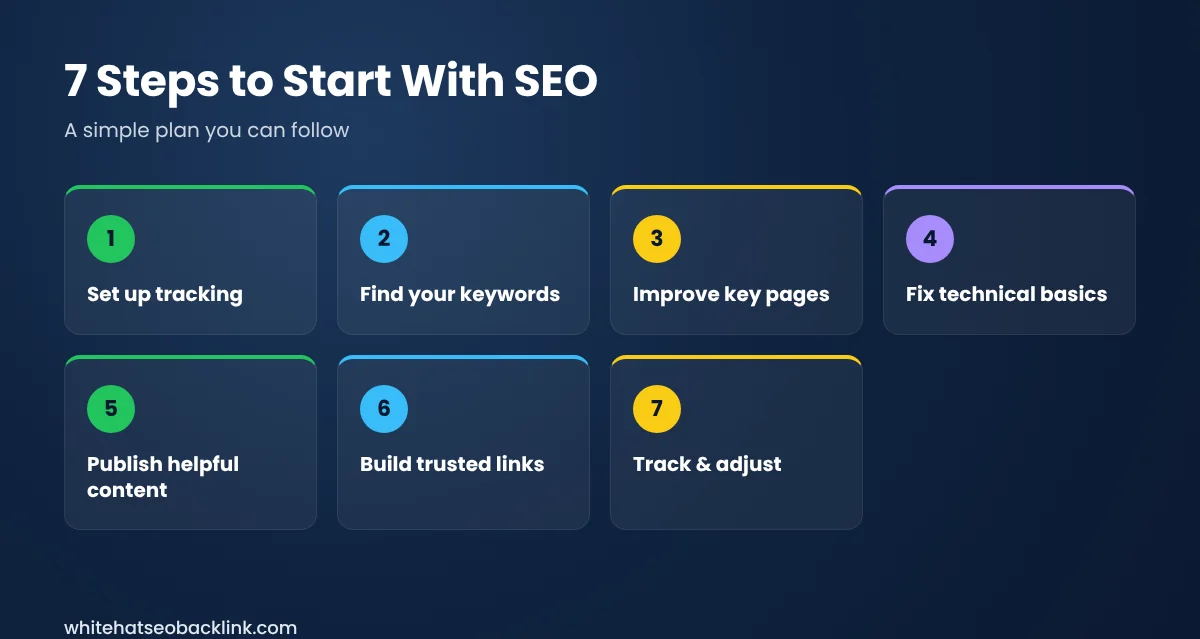
You don’t need to do everything at once. Start with these steps:
- Set up Google Search Console and Google Analytics so you can see how people find your site.
- Find your keywords. Look for specific phrases your customers search, especially longer ones with lower competition.
- Improve your most important pages. Make your homepage and service pages clear, helpful and well structured.
- Fix technical basics. Make sure your site is fast, secure and mobile-friendly.
- Publish helpful content regularly. Answer the questions customers ask you every week.
- Build trusted links. Earn mentions and links from relevant websites in your industry. Our guide on how to get backlinks lists methods that still work.
- Track and adjust. Check rankings, traffic and leads monthly, and improve what’s working.
Frequently Asked Questions
What is SEO in digital marketing in simple words?
SEO in digital marketing means improving your website so it shows up higher in Google’s free search results. It helps people find your business when they’re searching for what you offer.
Is SEO part of digital marketing?
Yes. SEO is one of the core channels in digital marketing, alongside paid ads, social media, email and content marketing.
How long does SEO take to work?
Most sites see early progress within 3 to 6 months, with stronger results after 6 to 12 months. It depends on competition, your website’s starting point and how consistently you work on it.
Can I do SEO for free?
Many SEO tasks cost only time, such as writing content, improving pages and setting up your Google Business Profile. Tools, content writers and link building usually add some cost as you grow.
Final Thoughts
SEO in digital marketing is the channel that connects you with people who are already searching for you. It takes longer to build than paid ads, but the traffic it brings keeps working long after the effort is done.
If you’re ready to build authority and climb the rankings, links from trusted, relevant websites are one of the biggest levers you can pull. Take a look at our link building packages or get a free link analysis to see what your site needs next.