Digital PR Link Building: How to Earn High-Authority Links (2026 Guide)
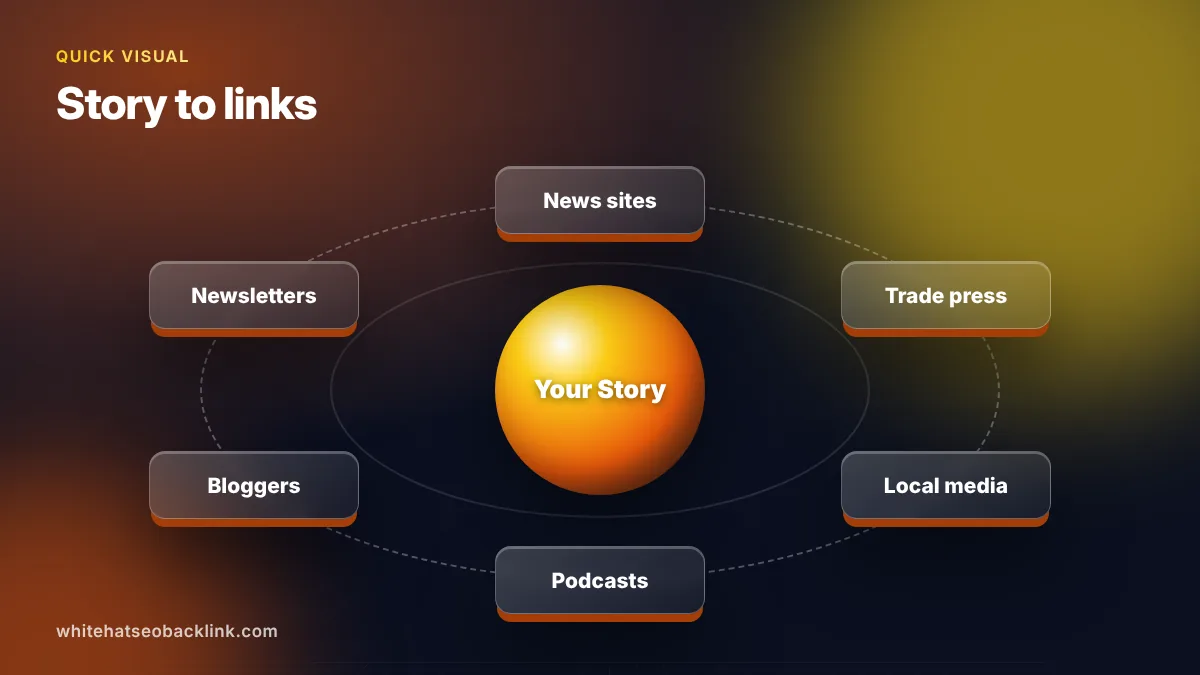
A single link from a major news site can do more for your rankings than fifty links from small blogs. The catch is that journalists will not link to you just because you ask. You have to give them a story worth covering.
That is the core of digital PR link building. In this guide you will learn what it is, the campaign types that work best, a simple 7-step process, and how smaller brands can win coverage without a big agency budget.
What is digital PR link building?
Digital PR link building is the practice of creating newsworthy content or expert commentary and pitching it to journalists, so they mention and link to your website in their articles. Instead of asking for links directly, you earn them by giving the media something useful to write about.
Traditional PR focuses on brand awareness and print coverage. Digital PR has the same storytelling skills, but it is measured in online coverage, backlinks, brand mentions and referral traffic.
Why digital PR link building is the safest way to earn authority
- Top-tier links. News sites like Forbes, BBC or industry publications carry huge authority that is almost impossible to get any other way.
- White hat by design. Links are editorially given, so there is no risk of penalties from paid or manipulative links.
- Brand visibility. Coverage builds trust with customers and, increasingly, with AI tools that learn which brands are experts in a topic.
- Scales well. One strong campaign can earn dozens of links from a single story.
Types of digital PR link building campaigns
| Campaign type | How it works | Effort |
|---|---|---|
| Data studies | Analyse public or internal data to reveal a surprising trend | Medium |
| Surveys | Ask 500 to 2,000 people a question and report the findings | Medium |
| Expert commentary | React quickly to breaking news with expert quotes | Low |
| Tools and calculators | Build a free interactive tool journalists can reference | High |
| Rankings and indexes | Rank cities, products or companies on clear criteria | Medium |
| Visual assets | Maps, charts or infographics that tell a story at a glance | Medium |
For smaller budgets, expert commentary and simple data studies give the best return.
Digital PR link building in 7 steps
Step 1: Know which publications you want
Make a list of 20 to 50 target sites: national news, trade publications and local outlets. Note which sections cover your topic and which journalists write those stories. This makes every later step faster.
Step 2: Find a newsworthy angle
Journalists want stories that are new, surprising, emotional or useful to their readers. A good test is the “would I tell a friend about this?” question. Ideas often come from:
- Your own customer or sales data
- Google Trends and seasonal topics
- Public datasets from government or industry bodies
- Common myths in your industry that you can prove wrong
Step 3: Create the campaign asset
Build a clear landing page on your site with the key findings first, followed by method, charts and a short summary journalists can copy. Add downloadable images and a contact for interviews. This page is where the backlinks will point.

Step 4: Write a short, sharp press pitch
Keep it under 200 words. Include a headline that could run as-is, three bullet points with the most striking findings, a quote from an expert in your company, and a link to the full data. Personalise the first line for each journalist.
Step 5: Use journalist request platforms
Reactive PR is the quickest win in digital PR link building. Platforms like Qwoted, Featured, Help a B2B Writer, Source of Sources and Connectively let journalists post requests for expert quotes. Respond fast with a helpful, specific answer. Our list of HARO alternatives covers the best options.
Step 6: Follow up and track coverage
Send one polite follow-up after three to five days. Then track mentions with Google Alerts, Ahrefs Alerts or a media monitoring tool. You will often find articles that mention your brand without a link.
Step 7: Reclaim unlinked mentions
When a publication mentions your study but forgets the link, send a friendly note asking them to credit the source. This simple step can add 20% to 30% more links to a campaign. Read our guide on unlinked brand mentions for templates.

How to measure digital PR link building results
Do not judge a campaign on link count alone. Track:
- Referring domains earned and their authority
- Relevance of the linking sites to your niche
- Followed vs nofollow links, keeping in mind both have brand value
- Brand mentions and share of voice
- Organic traffic and ranking changes on pages linked from your campaign page
- Referral traffic from the coverage itself
A useful trick is to pass authority from your campaign page to money pages with strong internal links. This is how digital PR link building ends up boosting product and service rankings, not just the blog.
Digital PR link building on a small budget
You do not need a big agency to compete. Small brands win coverage by:
- Becoming the go-to expert in one narrow niche
- Targeting local and trade media, where competition is lower
- Using free data from Google Trends, government statistics or public reports
- Reacting quickly to news with useful, quotable comments
- Repurposing one study into many local angles, such as “best cities for…”
Combine these with image link building so your charts earn credit links whenever they are reused.
Common mistakes to avoid
- Self-promotional stories. Journalists ignore product launches dressed up as news.
- Weak data. Small samples or unclear methods get torn apart and rejected.
- Mass emailing the same pitch to hundreds of journalists without personalisation.
- Ignoring timing. Seasonal stories need pitching weeks before the event.
- No follow-through on unlinked mentions, which wastes hard-earned coverage.

FAQs
How long does a digital PR campaign take?
A data-led campaign usually takes three to six weeks to research, build and pitch. Reactive expert comments can earn links within days.
Is digital PR link building expensive?
It ranges widely. DIY reactive PR costs only your time, while agency campaigns can cost several thousand dollars. Compare this with our breakdown of link building costs to plan your budget.
Are nofollow links from news sites worth it?
Yes. They bring referral traffic, brand trust and mentions that help AI and search engines link your brand to a topic. Many journalists also syndicate stories, which can create followed links later.
Final thoughts
Digital PR link building rewards brands that tell useful, interesting stories. Pick your target publications, find an angle worth sharing, build a clean campaign page, pitch with care and reclaim every unlinked mention. Run one campaign a quarter, learn from the results, and you will build an authoritative link profile that competitors find very hard to copy.