Image Link Building: 7 White Hat Ways to Earn Links With Images
Images get shared far more than text. Bloggers, journalists and students grab charts, photos and diagrams every day, and many never link back. Image link building is the simple process of creating images people want to use, then making sure you get credit with a backlink when they do.
It is one of the easiest white hat tactics because you are not asking for a favor. You are asking for credit you already earned. Let’s go step by step.
What Is Image Link Building?
Image link building means earning backlinks through visual content. There are two sides:
- Creating images that others want to embed, like original charts, infographics and diagrams.
- Reclaiming links from sites that already use your images without crediting you.
Both are safe, natural and fully in line with Google’s guidelines.
Why It Works So Well
- Writers need visuals to break up text and explain data.
- A useful chart can be used on hundreds of sites over the years.
- Credit requests have a high reply rate because the site already likes your work.
- It works for small sites, not just big brands.
1. Create Original Charts From Your Own Data
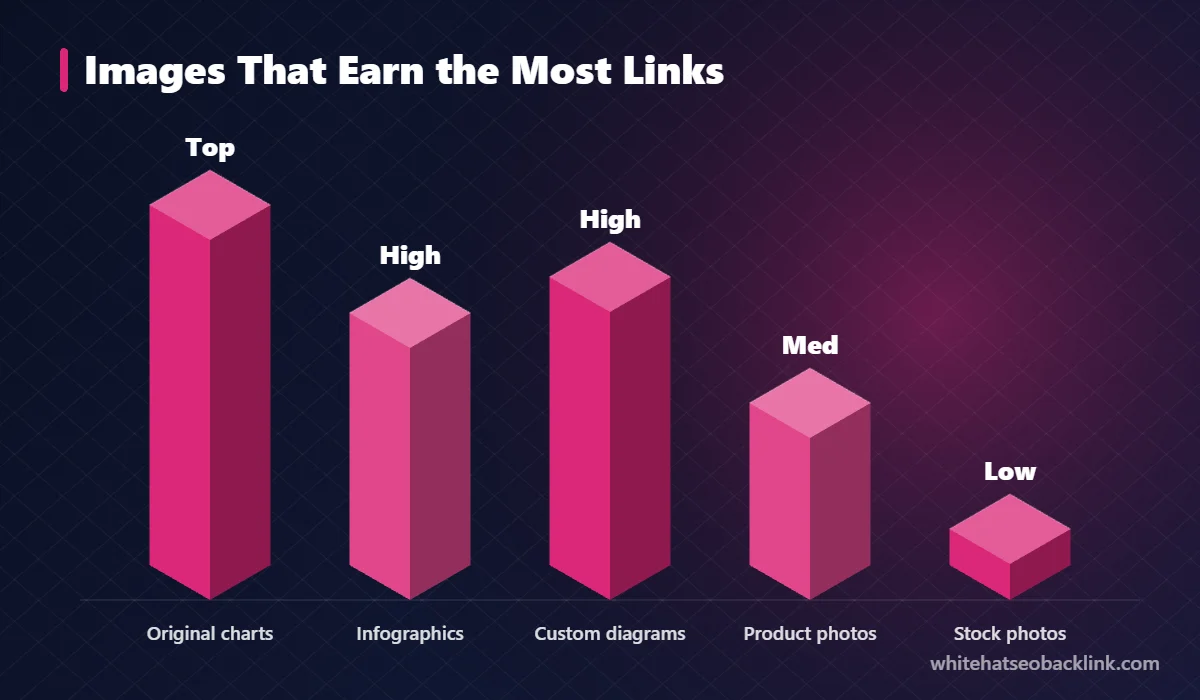
Data charts are the best performers in image link building. Run a small survey, pull numbers from your tools, or combine public stats into one clear chart. Writers love one strong number with a clean visual. Put a short “Feel free to use this chart with a link to the source” note under it.
2. Make Simple Diagrams That Explain a Process
A clear diagram of a hard idea is a magnet for links. Think “how a mortgage works” or “how Google crawls a page”. Keep it clean, readable on mobile and branded in one corner.
3. Build Infographics the Smart Way
Long infographics are less popular than they were. Instead, make mini infographics: one idea, one image. They fit inside blog posts and get used more often. Pitch them to writers who cover the topic.
4. Use Original Photos
Stock photos earn nothing because everyone has them. Your own product shots, team photos, event pictures or behind-the-scenes images are unique. Upload them to free libraries like Wikimedia Commons or Unsplash with a credit request, and they can travel widely.
5. Find Sites Already Using Your Images
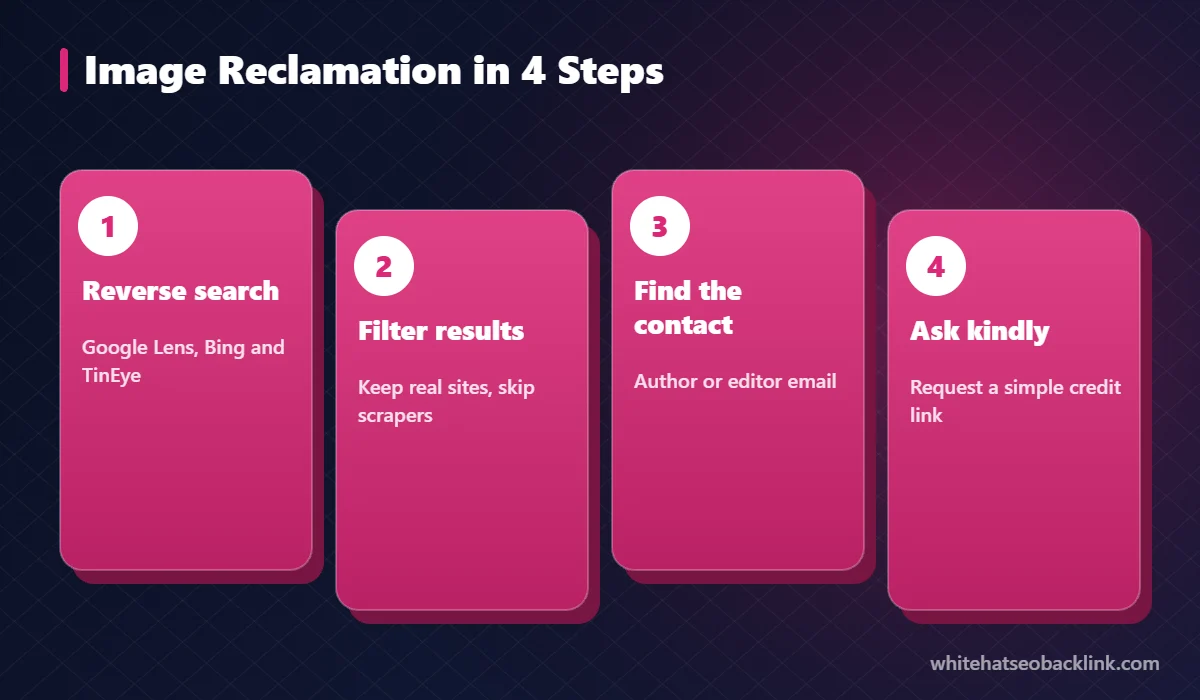
This is the reclamation side of image link building, and it is often the fastest win. Here is how:
- Google Lens – right-click any image in Chrome and choose “Search image with Google”.
- Bing Visual Search – often finds results Google misses.
- TinEye – great for exact copies and older uses.
- Ahrefs or Semrush – check sites that link to your image URL directly (hotlinking).
Put the results in a sheet. Remove scraper sites and spam. Keep real blogs, news sites and businesses.
6. Send a Friendly Credit Request
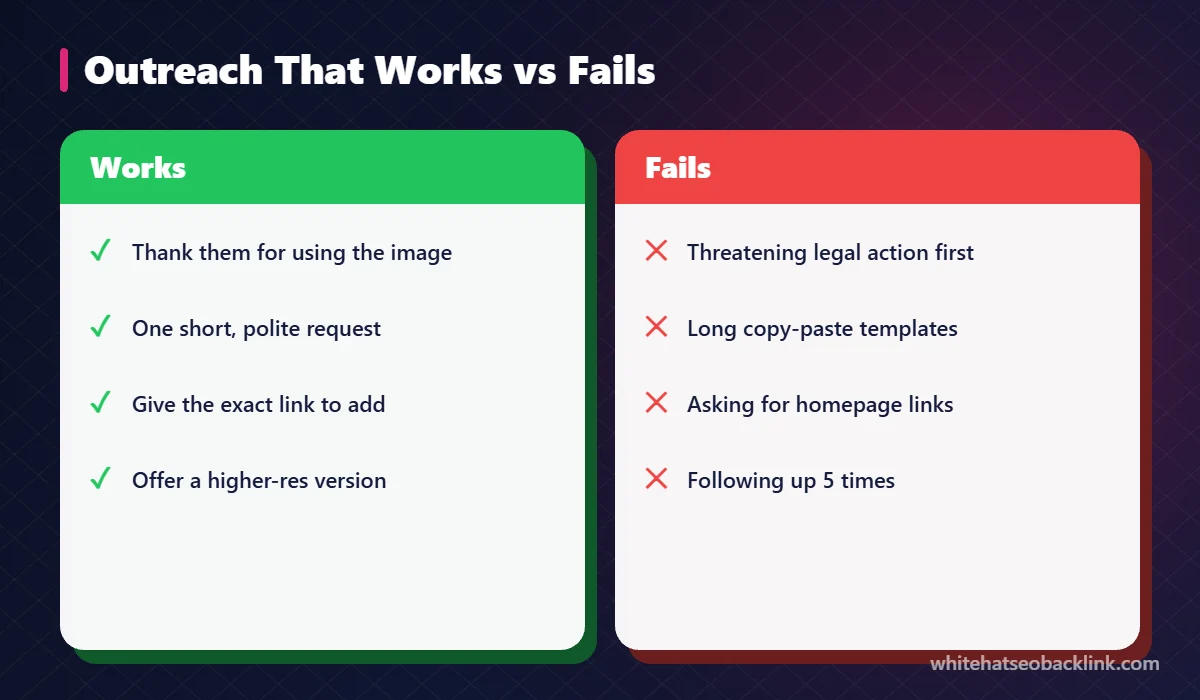
Short and kind wins. Here is a simple email:
Hi [Name], thanks for using our chart in your post on [topic]. It looks great there! Would you mind adding a credit link to the original source: [URL]? Happy to send a higher-resolution version if that helps. Thanks, [Your name]
Follow up once after a week. If they say no, thank them and move on. For more on recovering lost or missing links, see our link reclamation guide.
7. Make Your Images Easy to Credit
Remove every bit of friction:
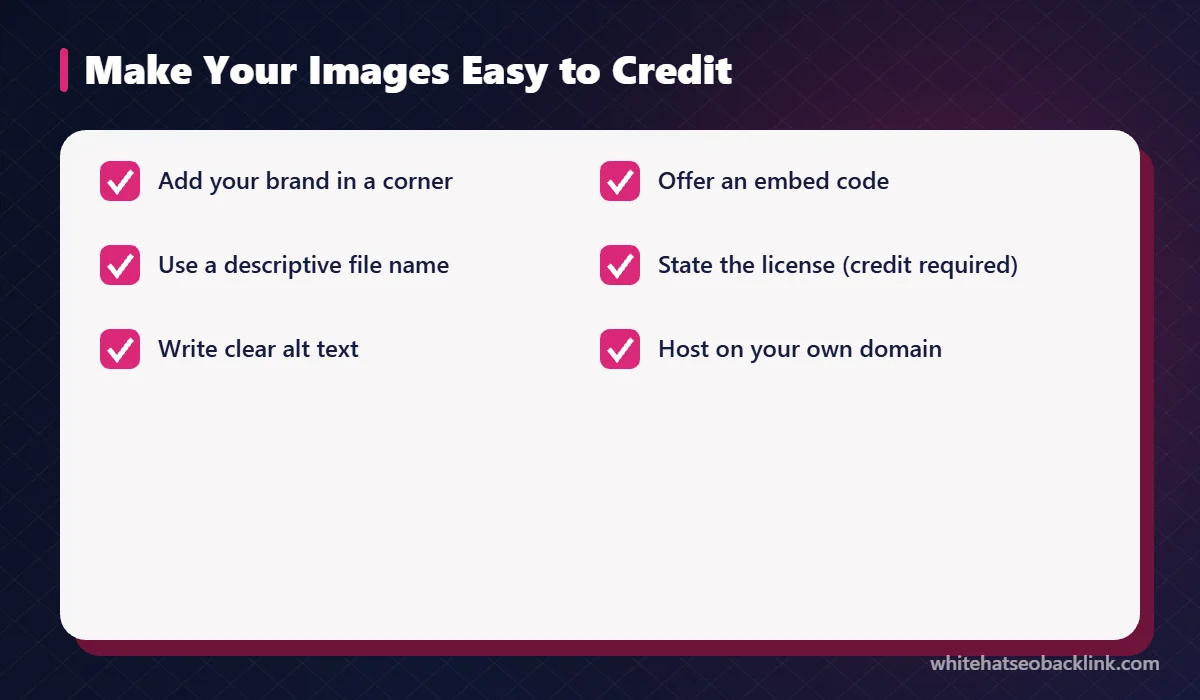
- Add a small brand mark in a corner.
- Name files clearly, like “email-open-rates-2026-chart.png”.
- Write good alt text so search engines understand the image.
- Add an embed code box under key images that includes the link.
- State the license, for example “Free to use with credit”.
These small steps make image link building work on autopilot over time, because people credit you without being asked.
How to Promote New Images
Don’t wait for people to find your visuals. Share them in relevant newsletters, on LinkedIn, in Reddit communities where they truly help, and with journalists who cover the topic. You can also offer an image when you pitch a guest post or reply to a reporter request.
Mistakes to Avoid
- Sending angry copyright emails as a first step
- Asking for links to your homepage instead of the image source page
- Using AI images with no real value. They rarely earn links.
- Forgetting to check whether the site already links to you elsewhere
Tracking Your Results
Image link building gets easier when you track it. Keep a simple sheet with the site, the image, the date you emailed and the result. Check your new backlinks monthly in Search Console or Ahrefs. A 20–40% success rate on credit requests is normal.
FAQ
Is image link building white hat?
Yes. You are creating helpful visuals and asking for fair credit. No payment or tricks are involved.
Do image links pass SEO value?
A text link to your source page passes the most value. A link wrapped around an image also counts; Google uses the alt text as the anchor.
How many images should I create?
Start with three to five strong visuals on your most important topics, then add more based on what gets used.
Final Thoughts
Image link building is simple: create visuals people want, find where they are used, and ask kindly for credit. It needs no budget and builds links that last for years. Start with a reverse image search on your best charts today. You may already have links waiting for you. It also pairs well with broken link building when you pitch new sites.